

Physical Therapy Careers and Salaries
Physical therapy is an integral component of healthcare and utilizes a wide range of skills to evalute, diagnose, and treat numerous conditions related to movement dysfunction. From common issues, such as arthritis, to more complex diseases, such as Parkinson or Alzheimer disease, physical therapists manage a variety of disorders affecting people of all backgrounds and ages.
If you’re interested in pursuing a physical therapy career, this resource will provide you with information regarding physical therapy jobs, requirements, skills, and specializations.
Click below to find out more information:
3 Tips to Start Your Physical Therapy Career
Finding a physical therapy job requires fundamental education, skills, and state licensure. Being a physical therapist is more than just a job, it’s a lifelong vocation dedicated to changing people’s lives and enhancing their health. Below are three tips on how you can pursue this rewarding career.
Tip 1: Earn a Bachelor’s and Acquire Field Experience
If you want to pursue a career as a physical therapist, you must begin by earning your bachelor’s degree. Acquiring field experience will benefit you as you apply for your doctorate in physical therapy. Many programs require applicants to have experience working with patients under the supervision of a licensed physical therapist.
You can gain experience through volunteering (or work as support personnel) at physical therapy clinics, hospitals, long-term care facilities (e.g., nursing homes), and other healthcare settings.
Tip 2: Earn Your DPT from a CAPTE-Accredited Program
To begin your physical therapy career, you must first earn your Doctor of Physical Therapy (DPT) degree from a program that is accredited by the Commission on Accreditation in Physical Therapy Education (CAPTE). All practicing physical therapists in the U.S. are required to earn a DPT from an accredited school.
Having a GPA above 3.0, taking the Graduate Record Examination (GRE), and exemplifying physical therapy skills from field experience hours may help you stand out among other DPT applicants.
Earn a CAPTE-accredited hybrid DPT from Arcadia University.
Our program is ranked in the top 15 percent of DPT programs nationwide. Learn more today.
Tip 3: Obtain Physical Therapy Licensure for Your State
Before starting a physical therapy job, you are required to pass the National Physical Therapy Exam (NPTE) to obtain state licensure.
After you’ve passed the NPTE, you’ll have to check your specific state for further requirements as all states differ. You can find your state’s licensure requirements through the Federation of State Boards of Physical Therapy (FSBPT).
As you research DPT programs, determine if they offer free practice tests to help you prepare for the NPTE. Programs such as Arcadia’s hybrid DPT support students on their path to pass the NPTE by offering practice tests and faculty guidance.
Jump to:
Tips to Start Your Career
Work Settings & Careers
Career Outlook & Salaries
Where Do Physical Therapists Work?
Physical therapy work settings depend on the kind of physical therapy being administered. According to the Bureau of Labor Statistics (BLS), there were 247,700 physical therapy jobs in 2018, of which only 26% were hospital-based. This means the majority of physical therapists work in outpatient settings and are not board certified.1
There are a variety of workplaces for physical therapists. A few examples are:
- Acute care
- Rehabilitation hospitals
- Schools and preschools
- Sports training facilities
- Research centers
- Hospice care
- Home care
- Outpatient clinics
While most physical therapists take a generalist route, some decide to become board-certified in one of nine physical therapy specialties. These specialties are defined, maintained, and issued by the American Board of Physical Therapy Specialties (ABPTS). The ABPTS reports that as of June 2020, 30,041 individuals have achieved board certification as clinical specialists in physical therapy.2
They are as follows:
- Cardiovascular and Pulmonary Physical Therapy
- Clinical Electrophysiology Physical Therapy
- Geriatrics Physical Therapy
- Neurology Physical Therapy
- Oncology Physical Therapy
- Orthopedic Physical Therapy
- Pediatric Physical Therapy
- Sports Physical Therapy
- Women’s Health Physical Therapy
Find Your Physical Therapy Career
Out of the nine ABPTS-certified specialties, here are three examples of specialized physical therapy careers you can pursue.

Orthopedic Physical Therapy Jobs
Physical therapy that focuses on elements of the musculoskeletal system is known as orthopedic physical therapy. Conditions affecting joints, muscles, ligaments, bones, and tendons are treated in this category. Injuries treated include muscle strains, fractures, tendonitis, and bursitis.

Geriatric Physical Therapy Jobs
Diseases, illnesses, and chronic conditions that afflict people in the later stages of adult life are addressed in geriatric physical therapy. Conditions treated include Parkinson Disease, Alzheimer Disease, osteoporosis, and arthritis. Another focus of this specialty is maximizing muscle strength, flexibility, and range of motion to improve mobility and function of this population.
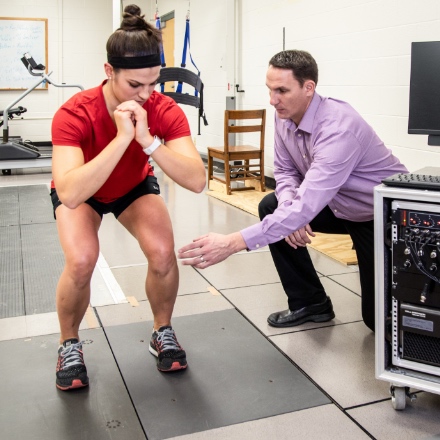
Sports Physical Therapy Jobs
Physical therapists who specialize in sports care rehabilitate athletes who have sustained injuries. Conditions treated include concussions, ACL tears, tennis elbow, golfer’s elbow, rotator cuff tears, and rolled ankles. Professional athletes require advanced physical therapy specialists.
Arcadia’s hybrid DPT program enables you to participate in 32 weeks of in-person, clinical education experience working with a variety of patient populations. Request information today to learn more about Arcadia’s hybrid DPT program.
Physical Therapy Assistants and Aides
According to the American Physical Therapy Association (APTA), physical therapist assistants, “are educated and licensed clinicians who provide care under the direction and supervision of a physical therapist.” Part of a physical therapist’s responsibilities is to guide and direct physical therapy assistants.
If you’re looking for an entry-level position in the field of physical therapy, consider becoming a physical therapy assistant or aide to gain clinical experience and make professional connections. The position typically requires a two-year associate degree from a CAPTE-accredited program and NPTE licensure.
Jump to:
Tips to Start Your Career
Work Settings & Careers
Career Outlook & Salaries
Projected Physical Therapy Outlook
According to the BLS, employment of physical therapists is projected to grow 18 percent from 2019 to 2029, much faster than the average for all occupations.
This growth is due to an aging baby boomer population, a prevalence in chronic conditions such as diabetes and obesity, and advances in technology.3
Top 3 Highest Paying States for Physical Therapists
Reported by the BLS, the following data is a snapshot of physical therapy salaries from across in the U.S. in May 2019. The salaries reported below are the annual mean wage.4
#1 Physical Therapy Salary in Nevada — $108,550
#2 Physical Therapy Salary in Alaska — $102,650
#3 Physical Therapy Salary in California — $99,920
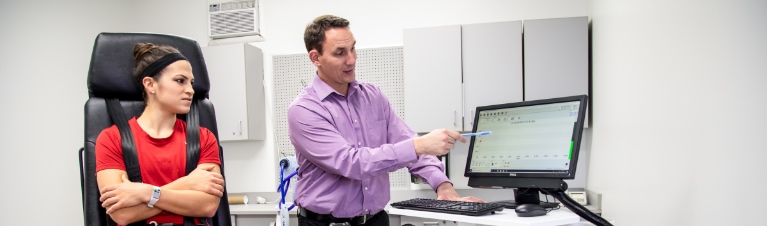
Pursue a Career in Physical Therapy with Arcadia’s Hybrid DPT Program
Arcadia University’s hybrid DPT program is ranked in the top 15 percent of all DPT programs in the nation, enabling you to graduate from the No. 33-ranked Doctor of Physical Therapy (DPT) program in 26 months without relocating.6
Arcadia’s hybrid DPT program’s CAPTE-accredited curriculum was designed by experienced physical therapists who are researching and applying the latest physical therapy science in the field.
Through a mix of online classes, in-person clinical experiences, and on-campus immersions, you’ll learn the skills needed to evaluate, diagnose, and treat physical therapy patients from all backgrounds and ages.
Take the first step today and find out how Arcadia’s hybrid DPT can prepare you to become a licensed physical therapist who has the skills to help patients change their lives.
1 Bureau of Labor Statistics, Physical Therapists, (Accessed August 2024) arrow_upwardReturn to footnote reference
2 American Board of Physical Therapy Specialties, June 2020, (Accessed August 2024) arrow_upwardReturn to footnote reference
3 Bureau of Labor Statistics, Physical Therapists, (Accessed August 2024) arrow_upwardReturn to footnote reference
4 Bureau of Labor Statistics, Physical Therapists, (Accessed August 2024) arrow_upwardReturn to footnote reference
5 Bureau of Labor Statistics, Physical Therapists, (Accessed August 2024) arrow_upwardReturn to footnote reference
6 U.S. World News & Report, Best Physical Therapy Schools, Accessed in August 2024. arrow_upwardReturn to footnote reference